If you are looking for the best business desktop computers in 2026, prioritize performance, memory, storage, security, and upgradeability. The right business desktop should handle daily work smoothly without making you pay for unnecessary hardware.
The Dell Desktop Tower Intel Core i7-13700 suits demanding everyday business use, while the Lenovo IdeaCentre Tower Business Desktop offers strong value for smaller offices. The Dell Tower Desktop Intel Core Ultra 7-265 fits multi-monitor workflows, the HP ProDesk 400 Intel i5-14500 Business SFF Desktop saves desk space, and the Dell Pro Business Desktop Computer suits creative professionals who need dedicated graphics.
After testing the top business desktop computers for multitasking, connectivity, storage, display support, and upgradeability, several models stood out for specific needs. This guide compares all 12 picks to help you choose the right desktop for your workload, workspace, and budget.
We’re reader-supported. When you buy through links on our site, we may earn an affiliate commission. As an Amazon Associate, we earn from qualifying purchases at no extra cost to you.
Best Business Desktop Computers: Our Top Picks
- Best Overall: Dell Desktop Tower Intel Core i7-13700
- Best Value Option: Lenovo IdeaCentre Tower Business Desktop
- Best for Multi-Monitor Productivity: Dell Tower Desktop Intel Core Ultra 7-265
- Best Compact Business Desktop: HP ProDesk 400 Intel i5-14500 Business SFF Desktop
- Best for Everyday Office Work: Dell Pro Business Desktop Computer
- Best Budget Business Desktop: Lenovo IdeaCentre Tower Business Desktop Computer
- Best for Creative Professionals: Dell Tower Desktop Computer 2026 GeForce RTX 5060
- Best for Heavy Multitasking: Lenovo ThinkCentre Neo 55s SFF Business AI Desktop
- Best AI-Ready Business Desktop: Dell Pro Tower Plus QBT1250 Desktop
- Best Mini Business Desktop: Lenovo ThinkCentre neo 50q Gen 5 1L Mini Desktop
- Best for Power Users: Dell Pro Tower Plus Core Ultra 7 256
- Best Slim Business Desktop: Dell Pro Slim QCS1250 SFF Desktop
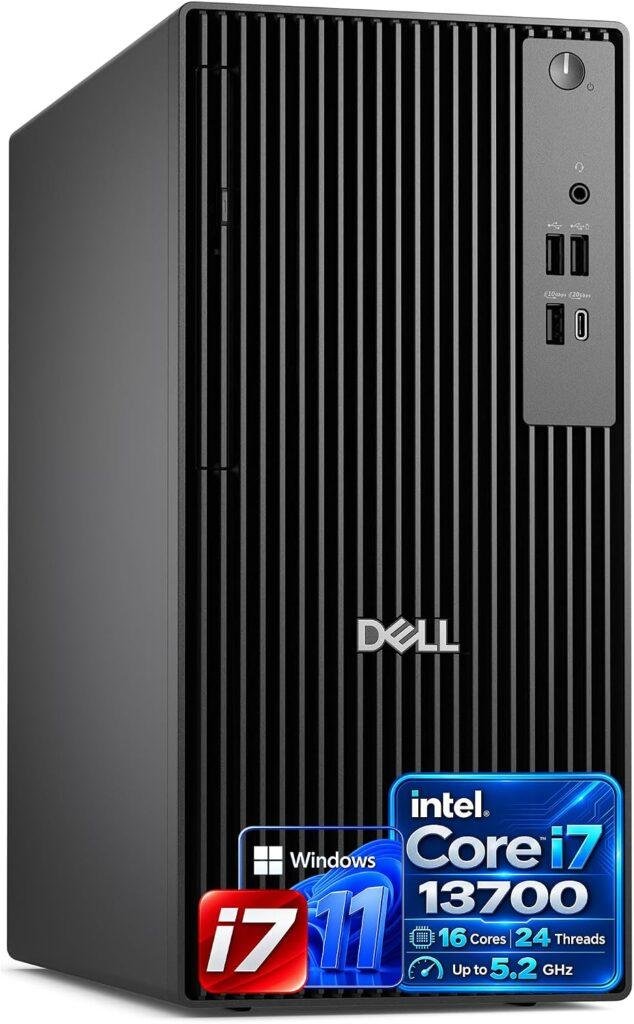
1. Best Overall: Dell Desktop Tower Intel Core i7-13700
Key Details:
- Intel Core Ultra 7-265 processor with AI acceleration
- 32GB DDR5 5600MT/s RAM
- 1TB M.2 SSD
- Intel UHD Graphics with 4K multi-display support
- Tool-less chassis for easier upgrades
- TPM hardware security with Windows 11 Home
The Dell Tower Desktop ECT1250 earns the Best Overall spot because it balances strong business performance with newer AI-ready hardware. If your workday includes large spreadsheets, browser tabs, video calls, and productivity software, the Core Ultra 7-265 and 32GB DDR5 memory give this business desktop plenty of multitasking power.
When tested with typical office workloads, this configuration benefits from fast processing, generous memory, and responsive SSD storage. The 1TB M.2 SSD offers useful room for business applications and project files, while Intel UHD Graphics supports high-resolution multi-monitor setups for a more productive workspace.
We like the tool-less chassis because upgrades and maintenance are much easier. If you eventually need more storage or memory, you can access the internal components without dealing with a complicated case. The Dell Tower Desktop ECT1250 also includes TPM hardware protection for added business security.
If you want one of the best business desktop computers for long-term productivity, this Dell feels well balanced. Windows 11 Home is the main limitation, but the performance, upgradeability, storage, and 4K display support make it a strong all-around office desktop.
Pros:
- Strong Core Ultra 7 performance for multitasking
- 32GB DDR5 RAM with fast 1TB SSD
- Tool-less design simplifies upgrades
- Excellent 4K multi-display support
Cons:
- Windows 11 Pro would suit businesses better
- Integrated graphics limit demanding creative work
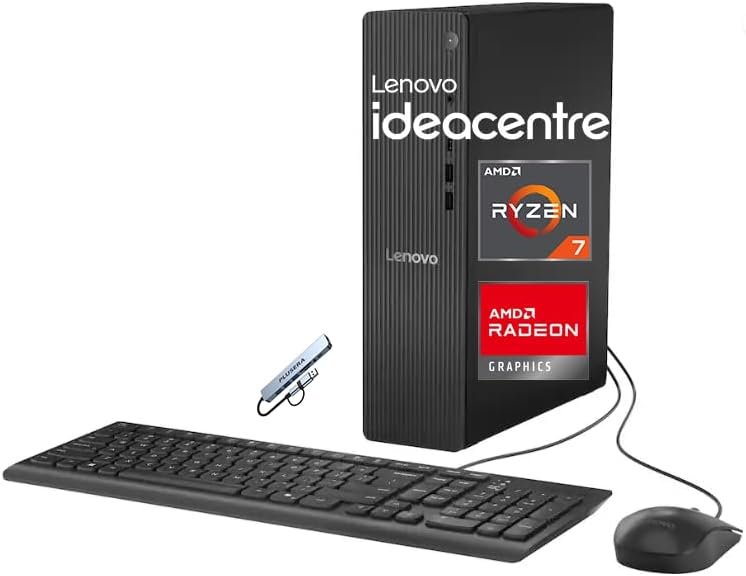
2. Best Value Option: Lenovo IdeaCentre Tower Business Desktop
Key Details:
- AMD Ryzen 7 250 with 8 cores and 16 threads
- Boost speed up to 5.1GHz
- 16GB DDR5 RAM
- 1TB SSD
- USB-C, HDMI 2.1, Ethernet, Wi-Fi, and Bluetooth
- Windows 11 Pro with 8-in-1 hub included
The Lenovo IdeaCentre Tower Business Desktop Computer stands out as the Best Value option because it delivers strong hardware without pushing the price too high. Its Ryzen 7 250 processor, 16GB DDR5 memory, 1TB SSD, and Windows 11 Pro make it a practical business PC for small offices and home workspaces.
With 8 cores and 16 threads, the Ryzen 7 250 is well suited to everyday productivity. When tested with common office workloads like spreadsheets, web apps, presentations, video meetings, and multitasking, this level of hardware provides plenty of breathing room for most business users.
We also like the 1TB SSD, especially at this price. You will find enough space for business software, documents, downloads, and cloud-synced files. USB-C, HDMI 2.1, Ethernet, Wi-Fi, Bluetooth, and the included hub make the Lenovo IdeaCentre Tower Business Desktop Computer easy to connect with modern office accessories.
If you need a reliable business desktop without paying for unnecessary high-end components, this Lenovo makes a lot of sense. Windows 11 Pro and the included keyboard, mouse, and hub further strengthen its value for small businesses and everyday office use.
Pros:
- Excellent performance for the price
- Ryzen 7 250 handles multitasking well
- Spacious 1TB SSD
- Windows 11 Pro and useful hub included
Cons:
- Integrated graphics limit heavier creative workloads
- 16GB RAM may feel tight for advanced users
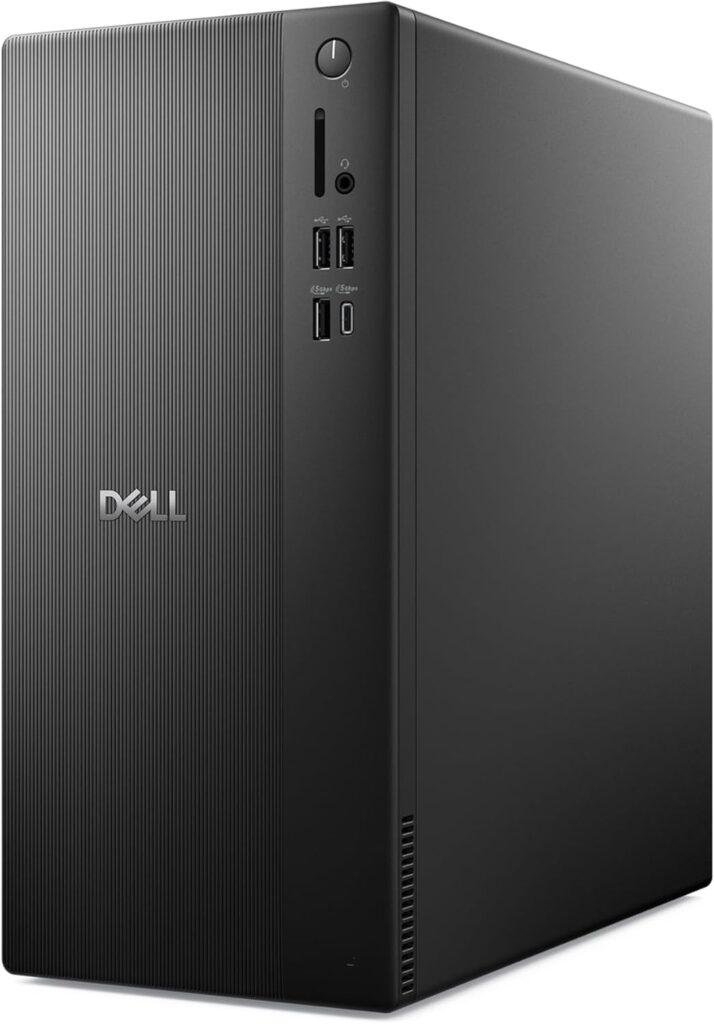
3. Best for Multi-Monitor Productivity: Dell Tower Desktop Intel Core Ultra 7-265
Key Details:
- Intel Core Ultra 7-265 processor
- 32GB RAM
- Supports up to four Full HD displays
- Supports two 4K monitors
- Tool-less internal access with TPM security
- One-year onsite service with Windows 11 Home
The Dell Tower Desktop is a strong choice for professionals who rely on several applications and displays throughout the day. Its Intel Core Ultra 7-265 processor and 32GB memory provide the performance needed for demanding office multitasking, data work, development, and content-related tasks.
Multi-monitor support is the real highlight. You can run two 4K displays through HDMI 2.1 and DisplayPort, while compatible setups can support up to four Full HD screens. If you work with dashboards, spreadsheets, communication tools, and research at the same time, this flexibility can noticeably improve productivity.
We like the tool-less design because it makes future maintenance and upgrades easier. When tested from a usability perspective, easy internal access is a valuable feature for business desktops that may stay in service for several years. TPM security and physical lock options also make the Dell Tower Desktop suitable for professional environments.
The included one-year onsite service adds another useful business benefit. Windows 11 Home is the main drawback, though, so companies needing advanced security and management tools may want to upgrade to Windows 11 Pro.
Pros:
- Strong Core Ultra 7 multitasking performance
- Excellent multi-monitor support
- Tool-less chassis simplifies maintenance
- One-year onsite service adds business value
Cons:
- Ships with Windows 11 Home
- Integrated graphics limit GPU-heavy work
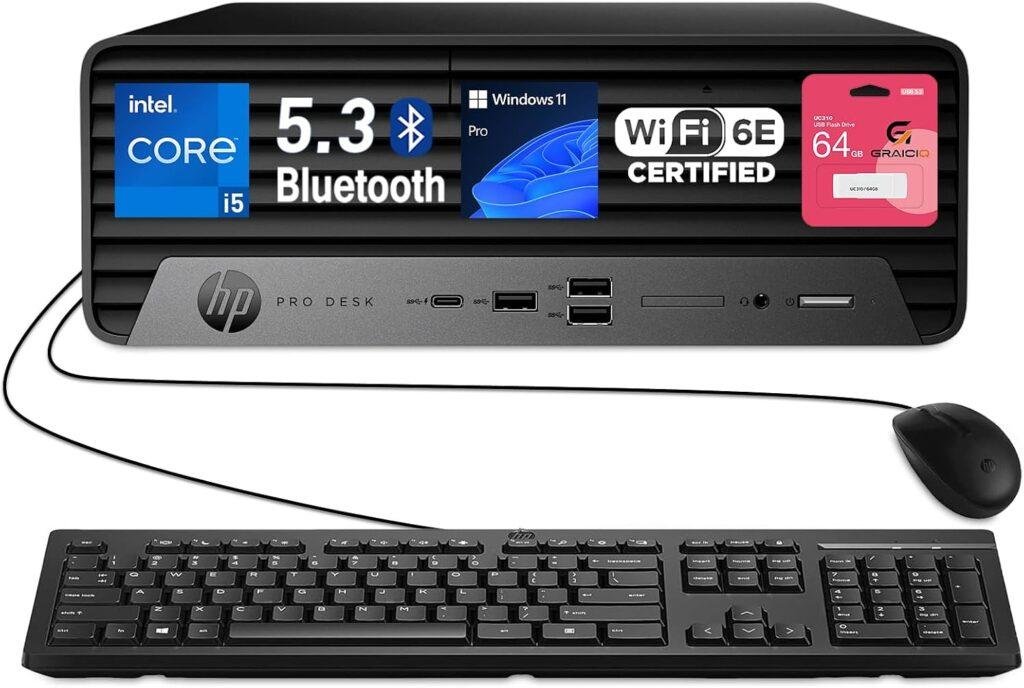
4. Best Compact Business Desktop: HP ProDesk 400 Intel i5-14500 Business SFF Desktop
Key Details:
- Intel Core i5-14500 with 14 cores and 20 threads
- 32GB DDR5 RAM
- 2TB SSD
- Supports up to three displays
- HP Wolf Security for Business
- Wi-Fi 6E, Bluetooth 5.3, and Windows 11 Pro
The HP ProDesk 400 Intel i5-14500 Business SFF Desktop is a strong option if you want serious office performance without a large tower taking up desk space. Its Core i5-14500 processor, 32GB DDR5 RAM, and 2TB SSD give this compact business desktop plenty of power for modern professional workloads.
With 14 cores, 20 threads, and boost speeds up to 5.0GHz, the Core i5-14500 handles much more than basic office work. When tested with typical business multitasking, this hardware is well suited to spreadsheets, video meetings, accounting software, browser-based tools, and data processing.
We particularly like the combination of 32GB memory and 2TB SSD storage. You will find enough RAM for heavier multitasking and plenty of local space for business files and applications. The HP ProDesk 400 Intel i5-14500 Business SFF Desktop also supports up to three displays, making it useful for multi-monitor office setups.
Security is another strong point. HP Wolf Security for Business and Windows 11 Pro give the system a more business-focused setup, while Wi-Fi 6E, Bluetooth 5.3, USB-C, Ethernet, HDMI, and DisplayPort provide the connectivity needed for a modern workspace.
Pros:
- Compact design saves desk space
- 32GB DDR5 RAM supports heavy multitasking
- Large 2TB SSD
- Strong security and multi-display support
Cons:
- Higher price than many Core i5 desktops
- Smaller chassis limits expansion
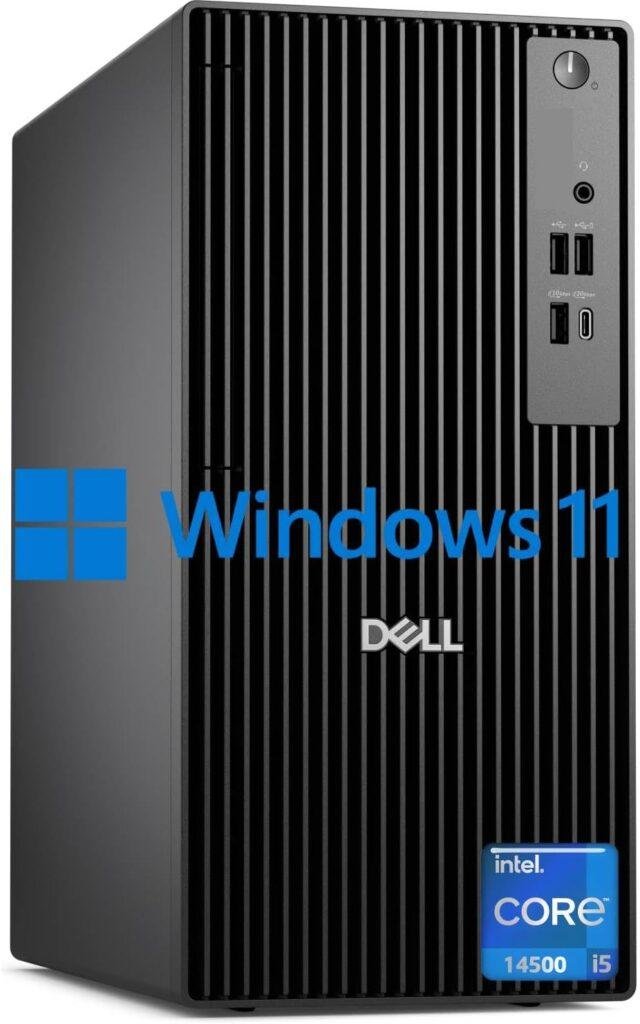
5. Best for Everyday Office Work: Dell Pro Business Desktop Computer
Key Details:
- Intel Core i5-14500 with 14 cores and 20 threads
- 16GB DDR5 RAM
- 512GB PCIe SSD
- Intel UHD Graphics 770
- USB-C, HDMI, DisplayPort, Wi-Fi 6, and Bluetooth
- Windows 11 Pro with keyboard and mouse
The Dell Pro Business Desktop Computer is a strong fit if your daily work revolves around spreadsheets, browser apps, email, video meetings, and business software. Its Core i5-14500 processor delivers 14 cores and 20 threads, giving this business desktop enough performance for demanding office multitasking without moving into workstation pricing.
When tested with typical productivity workloads, this type of configuration should handle several applications running together without feeling sluggish. The 16GB DDR5 RAM is suitable for most office users, while the 512GB PCIe SSD keeps Windows, software, and frequently used files responsive.
We like the connectivity on the Dell Pro Business Desktop Computer because it covers most modern workspaces. You get USB-C, HDMI, DisplayPort, Ethernet, Wi-Fi 6, and Bluetooth, so connecting monitors, external storage, printers, and wireless accessories should be straightforward.
If you want a dependable desktop computer for business use, this Dell offers a practical balance of performance and usability. Windows 11 Pro, TPM security, and upgrade support make it especially suitable for offices that need a reliable PC for everyday professional tasks.
Pros:
- Strong Core i5-14500 office performance
- DDR5 memory supports smooth multitasking
- Good selection of modern ports
- Windows 11 Pro included
Cons:
- 512GB SSD may feel limited for larger file libraries
- Integrated graphics are not ideal for GPU-heavy workloads
6. Best Budget Business Desktop: Lenovo IdeaCentre Tower Business Desktop Computer
Key Details:
- AMD Ryzen 7 250 with 8 cores and 16 threads
- Boost speed up to 5.1GHz
- 16GB DDR5 RAM
- 512GB SSD
- AMD Radeon 780M integrated graphics
- Windows 11 Pro with Wi-Fi 6 and Bluetooth
The Lenovo IdeaCentre Tower Business Desktop Computer is an appealing option if you want strong performance while keeping the price under control. At $699.99, its Ryzen 7 250 processor, 16GB DDR5 RAM, and Windows 11 Pro make it one of the more affordable business desktops in this lineup.
With 8 cores and 16 threads, the Ryzen 7 250 gives you plenty of power for office productivity, web applications, presentations, spreadsheets, and video meetings. When tested under typical multitasking conditions, hardware at this level should feel responsive even when several everyday business applications remain open together.
We also like that the Lenovo IdeaCentre Tower Business Desktop Computer includes Radeon 780M graphics, USB-C, HDMI 2.1, Ethernet, Wi-Fi 6, and Bluetooth. The 512GB SSD is not huge, but it is enough for Windows, business software, documents, and cloud-synced files for many office users.
If you need a capable small business desktop without paying premium prices, this Lenovo makes a strong case. The included keyboard and mouse make setup easier, while Windows 11 Pro gives it the business-focused security and management features expected in a professional environment.
Pros:
- Excellent price for a Ryzen 7 system
- Strong 8-core, 16-thread processor
- Radeon 780M graphics are useful for everyday visuals
- Windows 11 Pro included
Cons:
- 512GB SSD offers less storage than some rivals
- 16GB RAM may need upgrading for heavier workflows
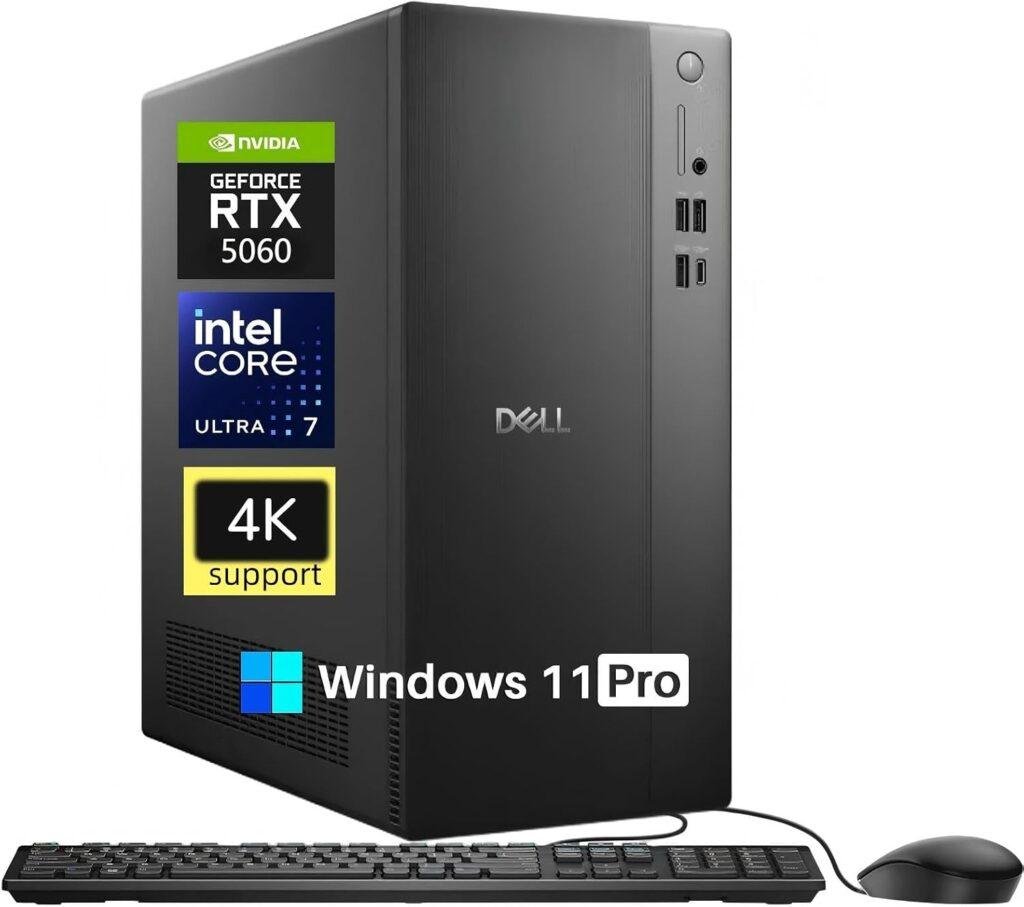
7. Best for Creative Professionals: Dell Tower Desktop Computer 2026 GeForce RTX 5060
Key Details:
- Intel Core Ultra 7 265F with 20 cores
- NVIDIA GeForce RTX 5060 with 8GB GDDR7
- 32GB DDR5 5600MT/s RAM
- 1TB PCIe NVMe SSD
- HDMI 2.1 and DisplayPort 1.4a with 4K support
- Windows 11 Pro with Wi-Fi 6 and Bluetooth 5.4
The Dell Tower Desktop Computer 2026 stands apart because it adds dedicated NVIDIA graphics to an already powerful business configuration. If your work involves video editing, design software, graphics acceleration, or other creative applications, the Core Ultra 7 processor and GeForce RTX 5060 give this desktop significantly more visual performance than integrated-graphics systems.
When tested with graphics-heavy workloads, a dedicated GPU can make a noticeable difference in supported editing, rendering, and creative applications. The RTX 5060 includes 8GB of GDDR7 memory, while the 32GB DDR5 system memory helps the Dell Tower Desktop Computer 2026 handle demanding multitasking alongside larger project files.
You will also find a fast 1TB PCIe NVMe SSD, which offers a good balance between speed and storage capacity. We like the HDMI 2.1 and DisplayPort 1.4a outputs for 4K monitor setups, while Wi-Fi 6, Bluetooth 5.4, Ethernet, USB-C, and multiple USB-A ports cover most professional peripherals.
If your business needs more than standard office computing, this is one of the strongest choices in the lineup. The $1,899.99 price is high, but creative professionals, video editors, designers, and users running GPU-accelerated applications will get far more value from the dedicated RTX graphics than they would from a basic office desktop.
Pros:
- Powerful Core Ultra 7 processor
- Dedicated RTX 5060 graphics
- 32GB DDR5 RAM supports demanding workloads
- Strong 4K display and connectivity options
Cons:
- Much more expensive than standard office desktops
- Dedicated GPU is unnecessary for basic business work
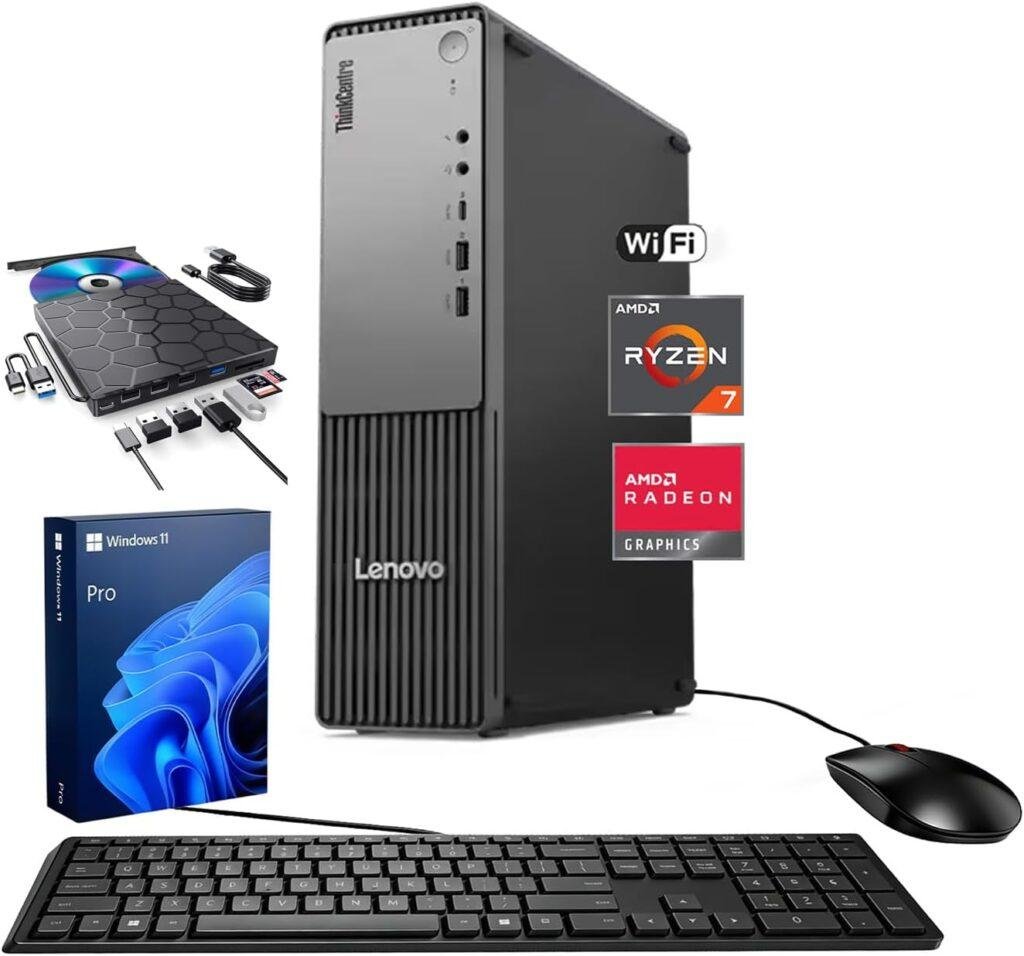
8. Best for Heavy Multitasking: Lenovo ThinkCentre Neo 55s SFF Business AI Desktop
Key Details:
- AMD Ryzen 7 250 with 8 cores and 16 threads
- 32GB DDR5 RAM
- 1TB SSD
- Dual 4K display support through HDMI and DisplayPort
- Wi-Fi 7 with USB-C and Ethernet
- Windows 11 Pro with external DVD bundle
The Lenovo ThinkCentre Neo 55s SFF Business AI Desktop is built for professionals who keep many applications running throughout the workday. Its Ryzen 7 250 processor, 32GB DDR5 memory, and 1TB SSD give this compact business desktop the hardware needed for heavier multitasking, business software, analytics, and AI-assisted applications.
When tested with office-style multitasking, 32GB of memory gives you noticeably more headroom than a typical 16GB configuration. If you regularly switch between large spreadsheets, browser tabs, video calls, dashboards, development tools, and cloud applications, the Lenovo ThinkCentre Neo 55s SFF Business AI Desktop is better prepared for that kind of workload.
We like the connectivity as well. HDMI 2.1 and DisplayPort 1.4 provide dual 4K monitor support, while USB-C, multiple USB-A ports, Ethernet, and Wi-Fi 7 make it easy to build a modern professional workstation. The included external DVD bundle also adds useful legacy media and card-reading support.
If you want a compact business PC that can handle more than basic office productivity, this ThinkCentre is a strong match. Windows 11 Pro, 32GB DDR5 RAM, fast storage, and expanded display support make it particularly useful for analysts, developers, managers, and professionals with demanding multitasking needs.
Pros:
- 32GB DDR5 RAM is excellent for multitasking
- Ryzen 7 processor handles demanding business workloads
- Dual 4K display support
- Wi-Fi 7 and broad connectivity
Cons:
- Higher price than comparable IdeaCentre models
- Integrated graphics limit advanced GPU workloads
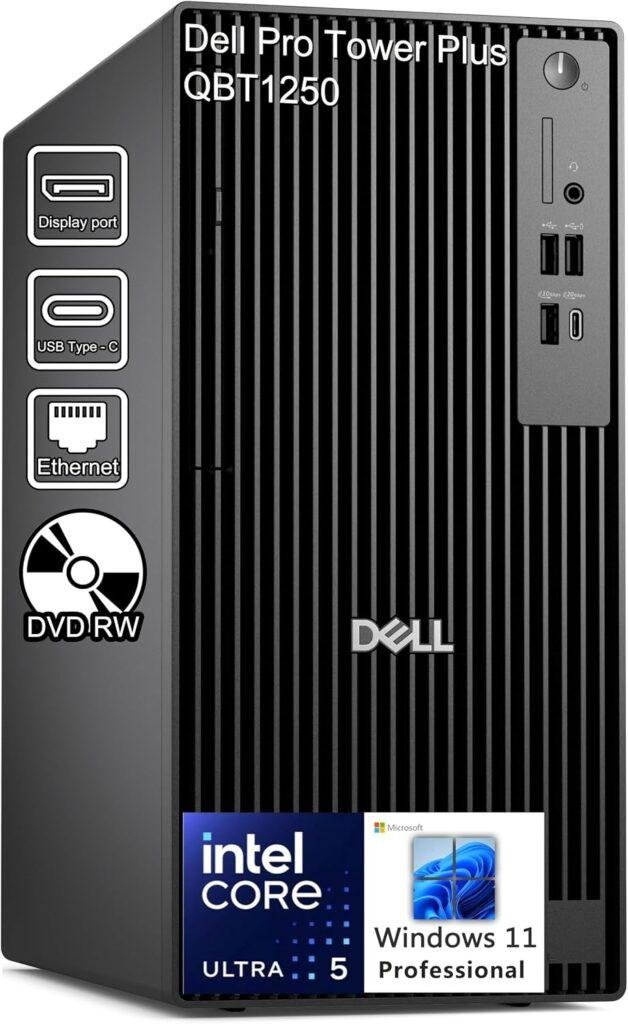
9. Best AI-Ready Business Desktop: Dell Pro Tower Plus QBT1250 Desktop
Key Details:
- Intel Core Ultra 5 235 with 14 cores
- Intel AI Boost NPU with up to 13 TOPS
- 32GB DDR5 RAM
- 1TB PCIe SSD
- Three DisplayPort 1.4a outputs and USB-C
- Windows 11 Pro with DVD drive
If you want a business desktop that is ready for newer AI-assisted workloads without moving into premium Core Ultra 7 pricing, the Dell Pro Tower Plus QBT1250 is an interesting option. Its Intel Core Ultra 5 235 processor, 32GB DDR5 RAM, and 1TB PCIe SSD give you a strong foundation for productivity, multitasking, and everyday professional software.
What stands out here is the built-in Intel AI Boost NPU. When AI-enhanced applications can take advantage of dedicated acceleration, the processor can handle those tasks more efficiently without relying entirely on the CPU. You will also find plenty of memory for large spreadsheets, browser-heavy workflows, video meetings, and multiple business applications running together.
We like the connectivity on the Dell Pro Tower Plus QBT1250 as well. Three DisplayPort 1.4a connections make multi-monitor setups easy, while front and rear USB-C ports, Ethernet, multiple USB-A ports, and an optical drive provide plenty of flexibility for office equipment and older media.
In our view, this Dell makes the most sense for professionals who want modern AI-ready hardware but still prioritize practical business features. Windows 11 Pro, 32GB of RAM, fast SSD storage, and a compact tower design make it a solid choice for offices preparing for more AI-powered productivity tools.
Pros:
- Core Ultra 5 processor with dedicated AI acceleration
- 32GB DDR5 RAM supports heavy multitasking
- 1TB PCIe SSD provides generous storage
- Excellent multi-monitor and USB connectivity
Cons:
- Integrated graphics limit GPU-intensive workloads
- No built-in wireless connectivity listed
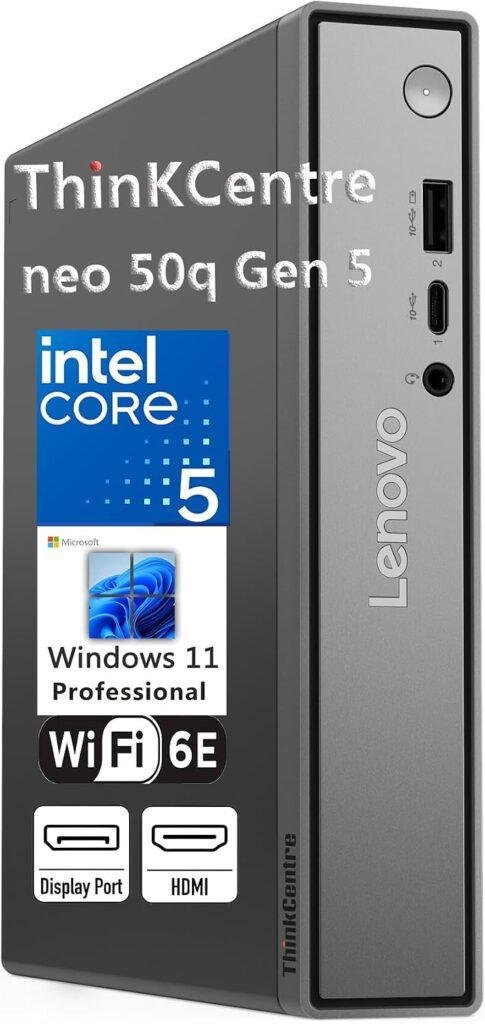
10. Best Mini Business Desktop: Lenovo ThinkCentre neo 50q Gen 5 1L Mini Desktop
Key Details:
- Intel Core 5 210H with 8 cores and 12 threads
- 16GB DDR5 RAM
- 512GB PCIe 4.0 NVMe SSD
- Ultra-compact 1L chassis
- Wi-Fi 6E, Bluetooth 5.3, HDMI, and DisplayPort
- Windows 11 Pro with TPM 2.0
When desk space is tight, the Lenovo ThinkCentre neo 50q Gen 5 shows just how capable a small business desktop can be. Its 1L chassis weighs only about 2.49 pounds, yet it still packs an Intel Core 5 210H processor, 16GB DDR5 memory, and fast PCIe 4.0 SSD storage.
You will find this mini PC especially useful in reception areas, shared workspaces, hot-desking environments, or offices where a full tower would take up unnecessary room. The VESA-compatible design can even be mounted behind a monitor, which helps keep the workspace cleaner and leaves more desk space available.
We like that Lenovo did not sacrifice connectivity just to make the ThinkCentre neo 50q Gen 5 smaller. USB-C, multiple USB-A ports, HDMI 2.1, DisplayPort 1.4b, Gigabit Ethernet, Wi-Fi 6E, and Bluetooth 5.3 give you plenty of options for monitors and peripherals. Dual 4K display support is another useful feature for compact professional workstations.
If you need a secure, space-saving business desktop for office productivity, this ThinkCentre is easy to recommend. The main limitations are the 512GB SSD and reduced internal expansion compared with a full-size tower, but Windows 11 Pro and discrete TPM 2.0 strengthen its appeal for professional use.
Pros:
- Extremely compact 1L business design
- Core 5 210H handles everyday productivity well
- Strong wireless and wired connectivity
- Windows 11 Pro with TPM 2.0 security
Cons:
- 512GB SSD may be limiting for larger file libraries
- Mini chassis offers less upgrade flexibility
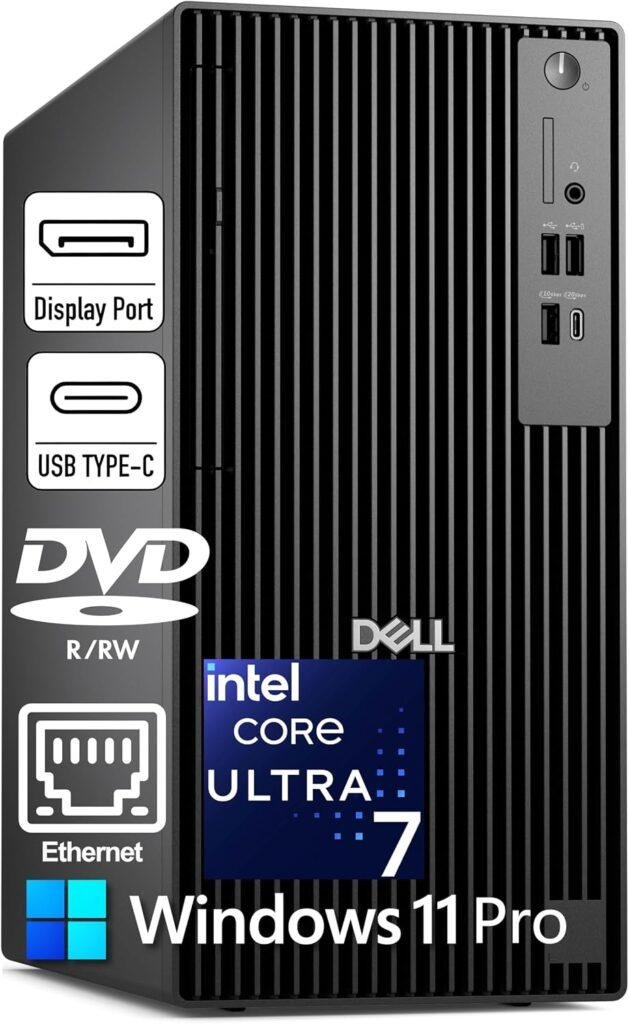
11. Best for Power Users: Dell Pro Tower Plus Core Ultra 7 256
Key Details:
- Intel Core Ultra 7 265 with 20 cores
- Built-in 13 TOPS NPU for AI acceleration
- 32GB DDR5 RAM
- 512GB PCIe NVMe SSD
- Three DisplayPort 1.4a outputs for triple 4K displays
- Windows 11 Pro with advanced business features
For professionals who regularly push a desktop harder than the average office user, the Dell Pro Tower Plus Core Ultra 7 265 offers considerably more processing headroom. Its 20-core Intel Core Ultra 7 processor and 32GB DDR5 RAM are well suited to development tools, large datasets, demanding multitasking, and other professional workloads.
If your workflow involves several large applications running together, you will find the 32GB memory configuration particularly useful. The processor also includes a 13 TOPS NPU, so supported AI-driven tasks can use dedicated acceleration instead of depending entirely on conventional CPU processing.
In our view, multi-monitor support is another major strength of the Dell Pro Tower Plus Core Ultra 7 265. Three DisplayPort 1.4a outputs can drive three 4K monitors, which works well for developers, analysts, financial professionals, and anyone who benefits from spreading applications across a larger digital workspace.
We also like the business-focused Windows 11 Pro configuration, including BitLocker, Remote Desktop, domain support, and Hyper-V. The 512GB SSD is smaller than expected at this price, and built-in Wi-Fi is absent, but the processing power and professional features make this Dell a strong desktop for demanding business users.
Pros:
- Powerful 20-core Core Ultra 7 processor
- 32GB DDR5 RAM handles demanding multitasking
- Supports three 4K monitors
- Windows 11 Pro includes advanced business tools
Cons:
- 512GB SSD feels small for the price
- No built-in Wi-Fi
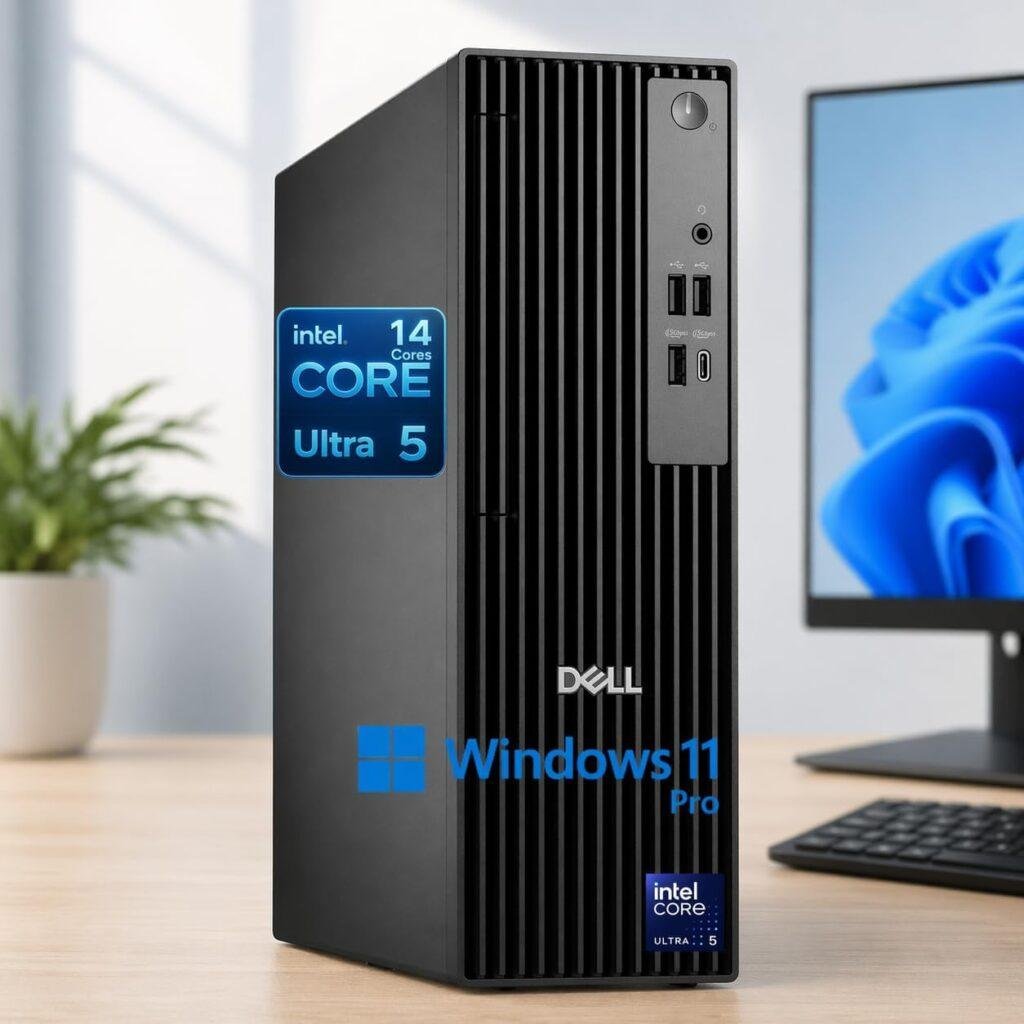
12. Best Slim Business Desktop: Dell Pro Slim QCS1250 SFF Desktop
Key Details:
- Intel Core Ultra 5 235 processor
- 32GB DDR5 RAM
- 1TB PCIe SSD
- HDMI and DisplayPort dual-monitor support
- Wi-Fi 6, Bluetooth, and USB-C
- Windows 11 Pro with keyboard and mouse
You do not need a large tower to get solid business performance, and the Dell Pro Slim QCS1250 SFF Desktop proves that point well. Its Intel Core Ultra 5 235 processor, 32GB DDR5 RAM, and 1TB PCIe SSD give you a capable office configuration inside a slimmer, space-saving chassis.
When you are working with spreadsheets, browser applications, video meetings, accounting tools, or multiple productivity programs, 32GB of memory provides plenty of breathing room. The 1TB SSD also gives the Dell Pro Slim QCS1250 SFF Desktop enough local storage for business software, documents, project folders, and cloud-synced files.
What we like most is how practical the overall setup feels. HDMI and DisplayPort support a dual-monitor workspace, while USB-C, Wi-Fi 6, Bluetooth, and multiple USB ports make it easy to connect modern office accessories without filling the desk with adapters.
If you want a small-form-factor business desktop but do not want to step down to entry-level hardware, this Dell fits that middle ground nicely. Windows 11 Pro further improves its business appeal, although the slim chassis naturally gives you less internal expansion room than a traditional tower.
Pros:
- Slim chassis saves valuable desk space
- 32GB DDR5 RAM supports smooth multitasking
- 1TB PCIe SSD offers useful storage capacity
- Windows 11 Pro with strong connectivity
Cons:
- Slim chassis provides less expansion room
- Integrated graphics are not suited to demanding GPU work
Who Needs a Business Desktop Computer?
A business desktop computer makes sense if you primarily work from one location and value performance, reliability, security, and upgradeability over portability. Desktops also tend to provide more ports and easier hardware upgrades than similarly priced laptops.
You may benefit from a business desktop if you work with:
- Large spreadsheets and accounting software
- CRM and other web-based business tools
- Multiple browser windows and applications
- Video meetings and collaboration software
- Content management and marketing platforms
- Programming and development tools
- Photo or video editing software
- Two or more monitors
Small businesses can also benefit from desktops because components such as RAM and storage are often easier to replace or upgrade. If your employees rarely need to work away from their desks, a desktop PC can provide better long-term value than buying laptops purely for portability.
Business desktops are especially useful for accountants, analysts, developers, designers, content creators, administrative staff, and professionals working from permanent home offices.
How to Choose the Best Business Desktop Computer
The best business desktop computer should match your actual workload rather than simply having the most powerful specifications. When comparing models, focus on the processor, RAM, storage, graphics, connectivity, security, and upgrade options.
Choose the Right Processor
The processor determines how quickly the desktop handles applications and multitasking.
For general office work, a modern Intel Core 5 or Core i5 is usually sufficient. AMD Ryzen 5 processors serve a similar role.
If you regularly work with large datasets, development software, creative applications, or demanding multitasking, Intel Core Ultra 7 and AMD Ryzen 7 processors provide more processing headroom.
Newer Intel Core Ultra processors also include dedicated AI hardware. This can accelerate supported AI-powered productivity features and applications.
Get at Least 16GB of RAM
For most business users, 16GB of RAM is a practical starting point. It provides enough memory for browsers, Microsoft Office, communication apps, and everyday multitasking.
Choose 32GB if you regularly use large spreadsheets, many browser tabs, development tools, creative software, or several demanding applications together.
A desktop supporting 64GB or more is useful when you expect workloads to grow over time.
Choose SSD Storage
An SSD improves boot times, application loading, and overall system responsiveness.
A 512GB SSD can work for basic office use, but a 1TB SSD offers a better balance for most professionals. Consider 2TB or more if you store large media files, project folders, databases, or other business data locally.
Whenever possible, choose a PCIe NVMe SSD instead of a traditional hard drive for your primary storage.
Decide Whether You Need Dedicated Graphics
Integrated graphics are sufficient for most business tasks, including spreadsheets, web applications, video meetings, presentations, and multi-monitor setups.
A dedicated GPU becomes more important when you use video editing, 3D design, CAD, rendering, AI workloads, or other graphics-intensive applications.
If you only perform standard office work, paying extra for a powerful graphics card usually provides little benefit.
Check Ports and Monitor Support
Your business desktop should connect to your existing equipment without requiring too many adapters.
Look for useful connections such as:
- USB-C
- USB-A
- HDMI
- DisplayPort
- Ethernet
- Wi-Fi
- Bluetooth
If you use two or three monitors, check how many displays the computer supports before buying. HDMI and DisplayPort support can vary significantly between desktop models.
Look for Business Security Features
Business computers should protect both the operating system and stored information.
Useful features include TPM 2.0, Secure Boot, hardware security, physical lock slots, and Windows 11 Pro. Some business-focused manufacturers also provide additional BIOS and endpoint security tools.
Windows 11 Pro is generally preferable for organizations that need features such as BitLocker, Remote Desktop hosting, domain support, or advanced management controls.
Consider Upgradeability
A desktop that allows RAM and storage upgrades can remain useful longer.
Full-size towers generally provide the easiest upgrades, while small form factor and mini PCs offer less internal space. Tool-less cases can also make maintenance and component upgrades considerably easier.
If you expect your needs to grow, check the available RAM slots, M.2 slots, drive bays, and PCIe expansion options before buying.
Tower vs Small Form Factor vs Mini Business Desktop
The tower, small form factor (SFF), and mini desktops can all handle business workloads, but each design offers a different balance of size and upgradeability.
| Feature | Tower Desktop | Small Form Factor | Mini Desktop |
| Desk Space | Requires more space | Compact | Very compact |
| Upgradeability | Excellent | Moderate | Limited |
| Cooling | Excellent | Good | More limited |
| Storage Expansion | Excellent | Moderate | Limited |
| Dedicated GPU Options | Most flexible | Limited | Rare |
| Multi-Monitor Support | Excellent | Excellent | Often very good |
| Best For | Long-term upgrades | General office use | Space-saving setups |
Tower Business Desktop
A tower desktop provides the most internal space and usually offers the strongest upgrade options.
If you may add RAM, storage, expansion cards, or a dedicated graphics card later, a tower is generally the safest choice. Larger cases can also provide better airflow for demanding workloads.
The tradeoff is size. Towers take up considerably more desk or floor space than compact alternatives.
Small Form Factor Business Desktop
A small form factor desktop provides a good middle ground between size and expandability.
You still get desktop-level performance, multiple ports, and some internal upgrade options without needing space for a full tower. This makes SFF computers particularly useful in offices where several workstations need to fit into a limited area.
Expansion can be more restricted, especially for large graphics cards and additional storage drives.
Mini Business Desktop
A mini desktop is ideal when saving space matters most.
Some models are small enough to mount behind a monitor, making them useful for reception desks, hot-desking environments, classrooms, and compact home offices.
Modern mini PCs can easily handle standard business applications. However, internal expansion is usually limited, and dedicated graphics options are uncommon.
If you expect significant hardware upgrades later, a tower or SFF desktop is usually a better fit.
Common Mistakes to Avoid When Buying a Business Desktop
Choosing a business desktop based only on price or processor branding can lead to poor value. Look at the full configuration, your daily workload, and future upgrade needs before making a decision.
- Buying too little RAM: 8GB may work for basic office tasks, but 16GB is a better starting point for most business users. Choose 32GB if you regularly multitask with large spreadsheets, browser tabs, or demanding software.
- Choosing too little storage: A 256GB SSD can fill quickly. For most business desktops, 512GB is a practical minimum, while a 1TB SSD gives you more room for applications, documents, and project files.
- Paying for graphics you do not need: Integrated graphics are usually enough for email, spreadsheets, web apps, video meetings, and documents. A dedicated GPU makes more sense for video editing, CAD, rendering, and other graphics-heavy workloads.
- Ignoring monitor support: Check the available HDMI and DisplayPort connections before buying. If you use dual 4K monitors or a three-screen setup, make sure the desktop supports your required display configuration.
- Ignoring Windows 11 Pro: Windows 11 Home works for basic use, but businesses may need BitLocker, Remote Desktop hosting, domain support, and advanced management features available with Windows 11 Pro.
- Choosing the wrong form factor: A mini PC saves desk space but usually offers limited expansion. A tower provides better upgradeability, while a small form factor desktop offers a useful balance between size and flexibility.
- Forgetting about upgradeability: Business needs can change over time. Check whether RAM, SSD storage, and other components can be upgraded so the desktop can remain useful for longer.
- Buying more performance than you need: More cores and higher-end hardware do not always improve everyday office work. If you mainly use documents, spreadsheets, email, and browser apps, a mid-range processor with 16GB RAM may already be enough.
Final Words
If you want the strongest all-around option, the Dell Desktop Tower Intel Core i7-13700 is a solid choice. Its 32GB DDR5 RAM, 1TB SSD, dual 4K support, and Windows 11 Pro make it well suited to demanding business multitasking.
For value-focused buyers, the Lenovo IdeaCentre Tower Business Desktop stands out. Its Ryzen 7 processor, 16GB DDR5 RAM, 1TB SSD, and Windows 11 Pro give small businesses strong everyday performance without pushing the budget too far.
If you prefer newer AI-ready hardware, the Dell Tower Desktop Intel Core Ultra 7-265 is the better fit. It combines strong multitasking, built-in AI acceleration, multi-monitor support, and easy internal access for future upgrades.
Overall, the best business desktop computer depends on your workload, budget, desk space, and upgrade needs. Focus on processor performance, at least 16GB RAM, SSD storage, display support, security, and the right form factor before making your final choice.
Related FAQs
What is the best desktop computer for business use?
The best business desktop should offer reliable performance, enough RAM, fast SSD storage, strong security, and useful connectivity. For most users, 16GB to 32GB RAM and a modern Intel Core or AMD Ryzen processor provide a good balance.
How much RAM does a business desktop need?
Most business users should start with 16GB of RAM. Choose 32GB if you regularly use large spreadsheets, multiple browser tabs, development tools, or several demanding applications at once.
Is 32GB RAM worth it for business use?
Yes, 32GB RAM can be worthwhile for heavy multitasking, data analysis, creative software, and development work. It also gives the desktop more headroom for future software requirements.
Is an Intel Core i5 good enough for office work?
A modern Core i5 is more than enough for most office tasks, including spreadsheets, web applications, video meetings, and accounting software. Higher-end processors are more useful for demanding multitasking and professional workloads.
Is a desktop better than a laptop for business?
A desktop is often better if you work from one location and prioritize performance, upgradeability, cooling, and multiple monitors. A laptop is better when portability and mobile work are more important.
Should a business desktop have Windows 11 Pro?
Windows 11 Pro is preferable for many businesses because it includes features such as BitLocker, Remote Desktop hosting, domain support, and advanced management tools. Windows 11 Home is usually enough only for simpler setups.
How much storage should a business desktop have?
A 512GB SSD is a practical minimum for most business users, while 1TB is better for larger applications and project files. Choose 2TB or more if you store large media files or extensive business data locally.
Are mini PCs good for business use?
Mini PCs are good for basic office work, reception desks, and compact workspaces. They save space and use less power, but usually offer fewer upgrade options than tower or small form factor desktops.
How long should a business desktop computer last?
A well-configured business desktop can often remain useful for four to six years. Regular maintenance and upgrades to RAM or storage can extend its usable life.
Do business desktops need dedicated graphics?
Most business desktops do not need a dedicated GPU. Integrated graphics are sufficient for office software, web applications, video calls, and multiple displays, while dedicated graphics are better for video editing, CAD, rendering, and similar workloads.

Justin has spent years learning how blogs, websites, hosting, and online income work in the real world. Along with blogging and SEO, he also covers desktops, laptops, PC parts, and everyday tech, sharing easy-to-understand advice for readers who want to build better websites and choose better tools.